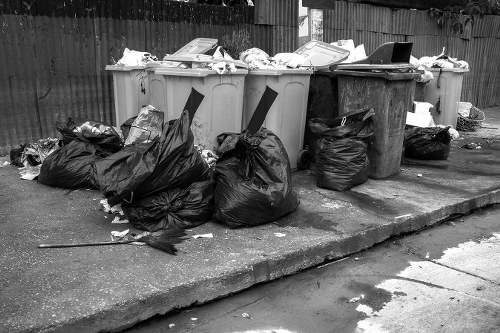
Complaints Procedure for Commercial Waste Sutton
This document sets out our formal approach to handling concerns about commercial waste collection and disposal services. The policy applies to all commercial refuse and rubbish removal arrangements and reflects a commitment to impartial, prompt, and transparent resolution. It explains how complaints are received, investigated, recorded and closed, and offers clear timeframes and possible outcomes. It is intended for any business customer or representative raising an issue about their commercial waste service in the service area.We aim to treat every complaint seriously and to learn from each report. Our objective is to resolve matters efficiently while maintaining the integrity of waste management operations. Complaints may relate to missed refuse collection, bin condition, contamination handling, safety incidents, service scheduling, or customer service interactions. Where the complaint concerns health, safety or environmental risk, it will be prioritised for immediate action.

Scope and acceptable grounds for complaint
Complaints can be submitted about any aspect of the provision of commercial waste services, including collection schedules, service quality, crew conduct, vehicle-related incidents, invoice or billing disputes linked to waste services, or failures to meet contractual obligations. Routine service requests, requests for new services or operational instructions are not classed as complaints unless they include a substantive dissatisfaction that remains unresolved after an initial response.How to make a complaint: a complaint should be made in writing or via the official reporting channel used by the service provider. When submitting a complaint, include details such as the business name, service location, account or reference number (if known), dates and times relevant to the issue, the nature of the complaint, and any evidence such as photographs. Complaints should be factual and focused on the event or service shortfall. Anonymous reports will be considered where they raise material concerns, but they may limit our ability to investigate fully.
Initial acknowledgement and triage
On receipt the complaint will be logged and acknowledged within a stated period. The acknowledgement will confirm the complaint reference, outline the process and provide an estimated timeframe for the initial response. Complaints are triaged to determine urgency and risk: high-risk matters (e.g., potential environmental harm) are escalated for immediate investigation; lower-risk service quality matters follow the standard timescale for review. Investigation process: investigations are proportionate to the nature of the complaint and may involve site checks, staff interviews, review of service logs, vehicle GPS records, CCTV where available and consideration of contractual terms. We aim to be fair and objective. During the investigation, any relevant evidence will be preserved and assessed. If the complaint involves third parties or contractors, we will coordinate with them as necessary to obtain facts and to implement corrective actions where appropriate.
Outcome types and remedies: after investigation, we will determine whether the complaint is upheld, partially upheld, or not upheld. Potential remedies include operational changes, schedule adjustments, repeat collection, refund or credit where appropriate, staff training, disciplinary measures where warranted, and procedural change to reduce recurrence. A formal written outcome will set out findings, the decision, any corrective actions taken, and a timeframe for completion. Remedies will be reasonable and aligned with contractual and regulatory frameworks governing waste services.
 Appeals and escalation: if the complainant is dissatisfied with the outcome they may request an internal review. The review will be conducted by a senior officer without prior involvement in the initial decision, and will focus on whether the investigation was thorough and the decision reasonable. Requests for internal review should state the grounds for appeal and any new evidence. The outcome of the internal review is final within the provider's internal procedures. Where regulatory or statutory issues arise, the complainant may pursue external channels as permitted by relevant legislation.
 Record keeping, confidentiality and learning: we maintain a central complaints register to record details, progress and outcomes. Records are retained in accordance with legal and data protection requirements. Personal information is treated as confidential and used only for the purposes of investigation and service improvement unless disclosure is required by law. Trends identified through complaints will inform service audits, training programmes and operational improvements so that recurring issues in commercial waste collection and rubbish management are addressed.
Timescales and expectations: while specific timings may vary, we aim to acknowledge complaints quickly and provide a substantive response within a defined period, typically no longer than 20 working days for standard matters and sooner for urgent or high-risk cases. If a full investigation cannot be completed in the anticipated period, we will update the complainant with reasons and a revised timescale. We expect complainants to cooperate by providing clear information and reasonable access to sites or records where required for investigation.
Commitment to impartiality and continuous improvement: we commit to handling complaints fairly and without bias. Complaints are an important source of information about service performance and customer experience. Continuous improvement is pursued by reviewing outcomes and integrating lessons learned into operational delivery, contract management, and staff training. This process helps ensure that commercial waste operations are safe, efficient and reliable for the businesses served.
Policy review: this complaints procedure will be periodically reviewed to ensure compliance with regulatory expectations and to reflect operational changes. The review cycle is designed to ensure clarity, accessibility and effectiveness in addressing concerns about commercial refuse and waste services. The policy supports transparency, accountability and a constructive approach to resolving issues for commercial waste customers.
